
Sport
BREAKING NEWS: The President of the Football Association (The FA), Mark Bullingham, publicly criticized FIFA following last night’s 2026 World Cup draw. “I HAVE IDENTIFIED THREE IRREGULARITIES IN LAST NIGHT’S DRAW, AND ONE OF THEM DIRECTLY AFFECTED THE ENGLAND NATIONAL TEAM, PUTTING US AT A DISADVANTAGE…” Mark Bullingham angrily declared, leaving everyone astonished at the truth behind a problematic draw. Immediately afterward, FIFA President Gianni Infantino personally responded to Mark Bullingham with A MESSAGE OF ONLY TEN WORDS, leaving him and the leadership of the Football Association completely speechless.

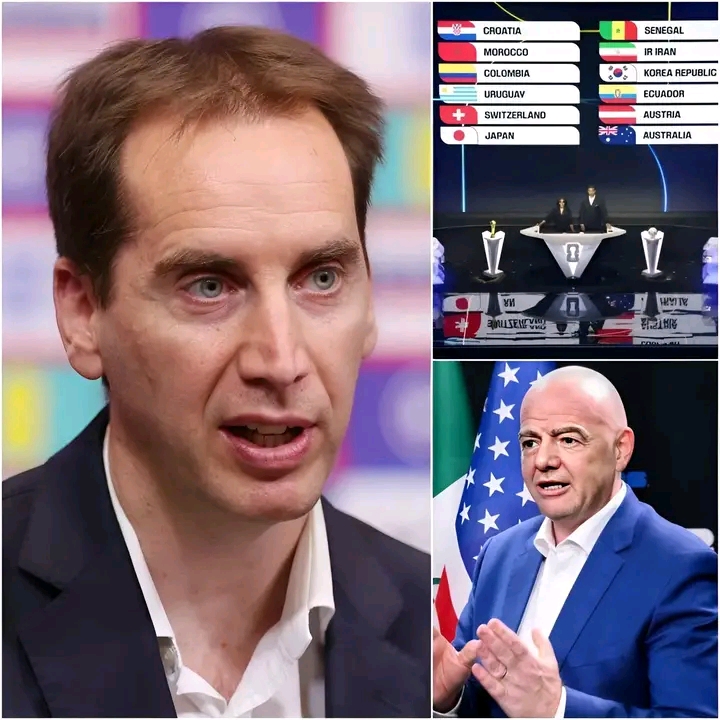
💥🚨 BREAKING NEWS: The President of the Football Association (The FA), Mark Bullingham, publicly criticized FIFA following last night’s 2026 World Cup draw. “I HAVE IDENTIFIED THREE IRREGULARITIES IN LAST NIGHT’S DRAW, AND ONE OF THEM DIRECTLY AFFECTED THE ENGLAND NATIONAL TEAM, PUTTING US AT A DISADVANTAGE…” Mark Bullingham angrily declared, leaving everyone astonished at the truth behind a problematic draw. Immediately afterward, FIFA President Gianni Infantino personally responded to Mark Bullingham with A MESSAGE OF ONLY TEN WORDS, leaving him and the leadership of the Football Association completely speechless.
In a highly charged development that has shaken the football world, Football Association president Mark Bullingham has openly taken aim at FIFA after the 2026 World Cup draw. Speaking to the media early this morning, he declared that he had identified three irregularities in the draw process, insisting that one of them directly harmed England’s national team and tilted the playing field before a single ball has been kicked.
Bullingham explained that his main concern was competitive fairness. He argued that the draw, as conducted, placed England at a clear disadvantage compared to other top teams, and that such an outcome could not simply be dismissed as coincidence. According to him, this was not just about one group or one opponent, but about a pattern that raised serious questions over how the draw was managed and supervised.
Following his explosive remarks, the FA moved quickly behind the scenes. Senior officials requested an urgent meeting with FIFA representatives in order to seek clarification and demand transparency. Bullingham hinted that he was not speaking based on suspicion alone, but on documents, communications and technical details that, in his view, suggested the draw process was not as open, random or accountable as it should have been at the highest level of world football.
FIFA’s reaction came swiftly, yet surprisingly briefly. Rather than holding a long press conference or issuing a detailed statement, FIFA president Gianni Infantino responded with a message that contained only ten words. Those few words, which have not yet been fully disclosed to the public, reportedly left Bullingham and the FA leadership stunned, adding fuel to an already intense media storm and sending journalists and analysts scrambling to interpret what had been implied.
Sources close to the FA claim that the ten word message carried a mix of subtle acknowledgment and firm dismissal. On one hand, it seemed to recognise that there might have been flaws or misunderstandings surrounding the draw procedure. On the other hand, it appeared to shut down any expectation of immediate corrective action. This combination of ambiguity and finality has only deepened suspicion that something important may be hidden from public view.
Football experts and pundits are now sharply divided. A number of analysts and former players have backed Bullingham, arguing that England has a long history of controversial tournament draws and that his concerns deserve serious investigation. Others suggest that the complexity of FIFA’s seeding rules and geographic balancing systems can easily produce outcomes that look unfair at first glance, yet remain statistically possible without any deliberate manipulation.
Within the FA, tension is said to be rising. Members of the England coaching staff fear that the ongoing controversy could become a distraction for players who should be focusing on preparation and tactics for the World Cup itself. As a result, senior officials are working closely with legal and regulatory experts to explore whether there is a basis for lodging an official complaint or appeal before the tournament starts, without allowing the squad environment to descend into chaos.
Meanwhile, investigative journalists have started breaking down every element of the draw. They have revisited FIFA’s published methodology, compared this year’s results with previous tournaments, and studied how teams were placed into pots. Some early reports highlight unusual patterns in how certain strong teams were grouped and how geographical considerations were applied, adding weight to Bullingham’s allegations and prompting louder calls for an independent audit of the entire process.
On social media, the reaction has been immediate and intense. Hashtags such as #FixTheDraw and #EnglandDrawControversy have surged across platforms, with many fans insisting that FIFA must provide full transparency if it wants to preserve trust in the World Cup. Others accuse Bullingham of overreacting or trying to gain a psychological advantage by framing England as victims of an unfair system before the tournament even begins.
Inside FIFA, anonymous insiders report that the organisation is under significant pressure. Internal discussions are said to revolve around several options: issuing a more detailed public explanation, offering procedural reforms for future draws, or, in an extreme scenario, considering a partial or full redraw. Any of these steps would be unprecedented at this level and could set a powerful example for how similar disputes are handled in the years to come.
Some technical experts have suggested that the so called irregularities might relate to small errors in ball handling, timing during the draw, or software assisted processes that were not fully explained to the public. If these issues prove to be accidental, FIFA could face backlash for poor communication rather than deliberate wrongdoing. However, if any intentional manipulation is discovered, it would trigger a major scandal, seriously damaging FIFA’s already fragile reputation and undermining faith in the integrity of the World Cup.
Bullingham has made it clear that he does not intend to let the matter quietly fade away. In a follow up interview, he stressed that the FA is not interested in attacking FIFA for publicity, but in protecting the fundamental principle of fairness. He insisted that England and every other national team deserve a level playing field, and that any doubt about the neutrality of the draw must be addressed directly, not brushed aside.
To that end, the FA is reportedly compiling a comprehensive dossier, including video evidence, time stamped communications and expert statistical analyses of the draw outcome. This file is expected to be submitted to FIFA’s ethics or governance bodies, and could serve as the foundation for formal proceedings if the FA decides to escalate the dispute. Bullingham is said to be personally involved in reviewing the material, determined that no relevant detail is missed.
As the story develops, many observers worry that the controversy could overshadow England’s sporting preparations. Instead of media attention focusing on tactics, player form and expectations, coverage has shifted toward governance, politics and questions of credibility. The coaching staff now face the challenge of shielding players from constant speculation while still staying informed about developments that could reshape the conditions under which they will compete.
The situation has also caught the attention of other national associations. Some are believed to be quietly reviewing their own positions and waiting to see if Bullingham’s push for greater transparency gains momentum. If FIFA is forced to acknowledge serious failings, it could energise calls for reform in how future World Cup draws, seeding systems and oversight mechanisms are designed and supervised.
At the heart of the matter lies that mysterious ten word reply from Gianni Infantino. Commentators and legal experts are already debating what it might imply, whether it was a tactical move to limit legal exposure, a veiled warning, or a confident dismissal. Whatever it contains, it has become a symbol of the distance between FIFA’s leadership and those demanding a clear, detailed explanation of what really happened during the draw.
For now, the football world waits. The World Cup is approaching, England finds itself in the middle of a global debate, and FIFA stands under an intense spotlight. The final outcome of this dispute could influence not only the 2026 tournament, but also the future of governance, trust and transparency in international football.

 Sport12 months ago
“I’m not trying to criticize Ancelotti, but I’m not happy with him for benching that player”: Bellingham Expresses Frustration Over Ancelotti’s Tactical Decision
- Sport12 months ago
BREAKING: Manchester City vs Liverpool Clash Cancelled! Title Race Takes a Twist
- Sport12 months ago
Arsenal Poised for January Swoop on €70 Million Star Dusan Vlahovic
- Sport12 months ago
WHAT ON GOD’S GREEN EARTH DID WE JUST SEE?!
- Sport12 months ago
Real Madrid: Carlo Ancelotti’s Surprising Revelations About an Unexpected Quality of Vinicius
- Sport12 months ago
BREAKING: Arsenal’s Champions League Quarterfinal Opponent Revealed After Monaco’s Dramatic Win – Tough Challenges Await Arteta’s Men
- Sport12 months ago
Chelsea Players Facing Suspension as Yellow Cards Mount
- Sport12 months ago
Key Arsenal Player Set for Return as Gunners Face Struggling Everton


